

Front-wheel drive, 180 horsepower, 1,8-liter naturally aspirated engine: that's what the seventh-generation Celica GT-S was like. The car had sparked the imagination of some Toyota bosses at the time, and they felt there was plenty of room to exploit. They dreamed up the perfect, or Ultimate Celica, and Rod Millen and TRD built it for them. The 500-horsepower, all-wheel drive monster ended up being wilder than they had imagined.
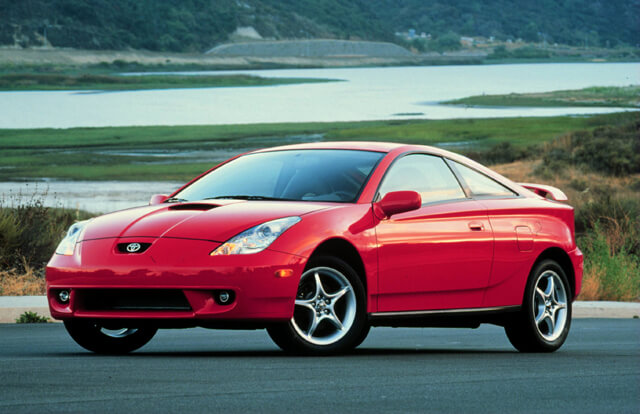 Our story began in 2000 with a brand-new Celica GT-S. The production car's 1,8-liter 2ZZ-GE engine sent 180 horsepower to the front wheels through a six-speed manual transmission. Toyota's American executives loved the spectacular coupe, but they also felt it could be much better. They wanted a cross between a street-legal Celica and a race car, and the goal of 500 horsepower was Rod Millen Motorsports and Toyota Racing Development, or TRD, received it.
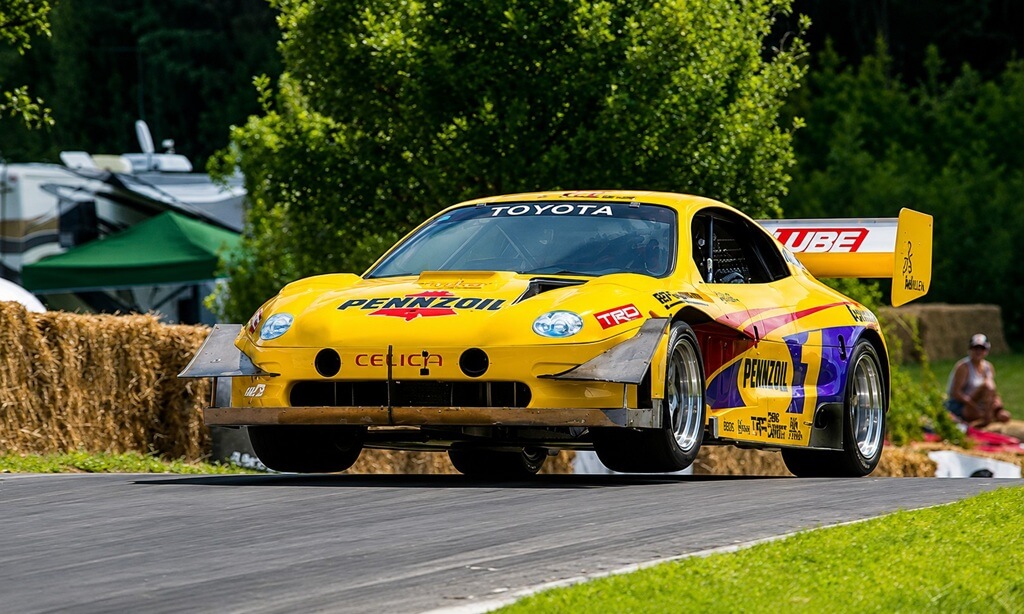
Millen's name was not mentioned by chance. The New Zealand rally driver and his team had worked with Toyota for a long time, and in 1994, he raced up the then mostly gravel Pikes Peak in an all-wheel drive Celica in 10:04,06. A track record was set that would last for more than ten years. The engine's technical pedigree went even further: the four-cylinder turbo engines in Toyota's American endurance racing cars won 21 of 27 races, 14 of them in a row. When the program ended, the liberated technology continued its life in Millen's mountain racing cars.
The Ultimate Celica was built on this heritage. The four-cylinder engine had a larger bore and stroke, Mahle forged pistons, titanium connecting rods and a solid crankshaft. The Garrett T04 ball-bearing turbo operated at 1,5 bar of boost, and the downpipe and stainless steel exhaust system were custom-made by Millen. The result was 500 horsepower at 8000 rpm and 461 Nm of torque.
The front wheels couldn't handle that much, so they dug up the all-wheel drive from the previous Celica GT-Four. The viscous coupling central unit and the rear Torsen diff were modified and installed in the new Celica, which was originally front-wheel drive. The rear suspension had to be re-sized, and a racing fuel tank was used in place of the trunk, so the rear seat had to go.
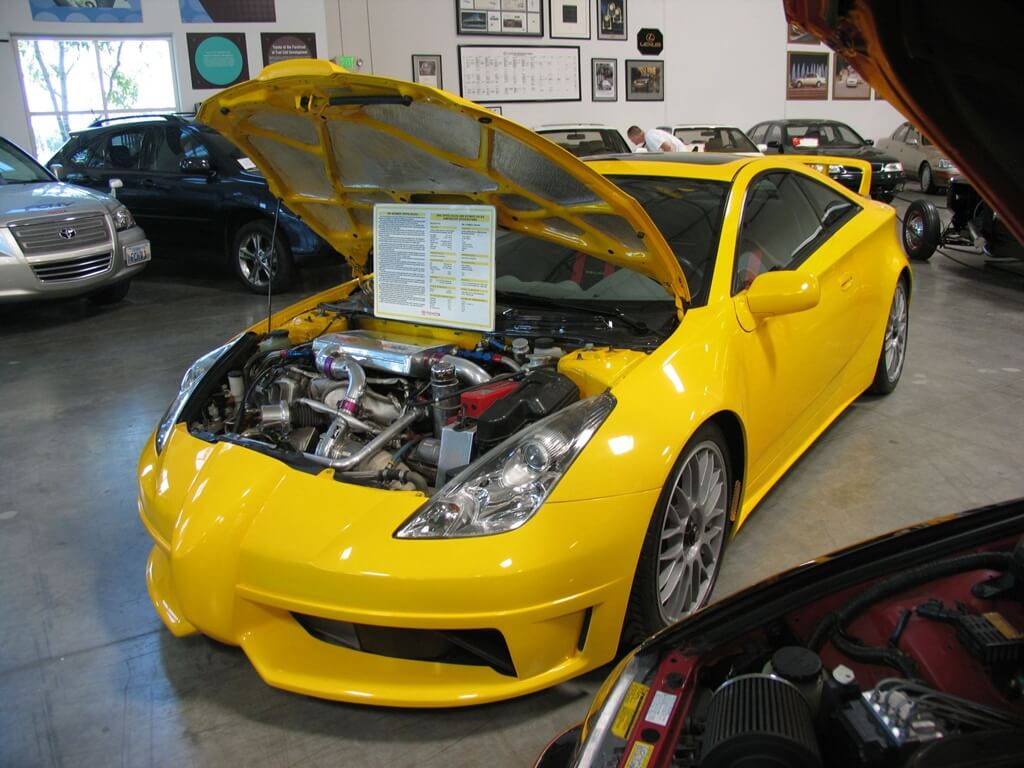
The Bilstein struts and springs were retuned to accommodate the extra weight, and 312-millimeter racing brakes provided deceleration. The Recaro seats were fitted with four-point seat belts, and the anti-roll bar tubes were hidden behind the interior trim. The 245/35 Michelin Pilot tires were mounted on 19-inch magnesium BBS racing wheels. The technology therefore far exceeded that of the production car.
The exterior was redesigned by Toyota's California design studio, Calty. It features a race-inspired nose and new body elements that make the Ultimate Celica nearly 10 centimeters wider at the front and 8 centimeters wider at the rear.
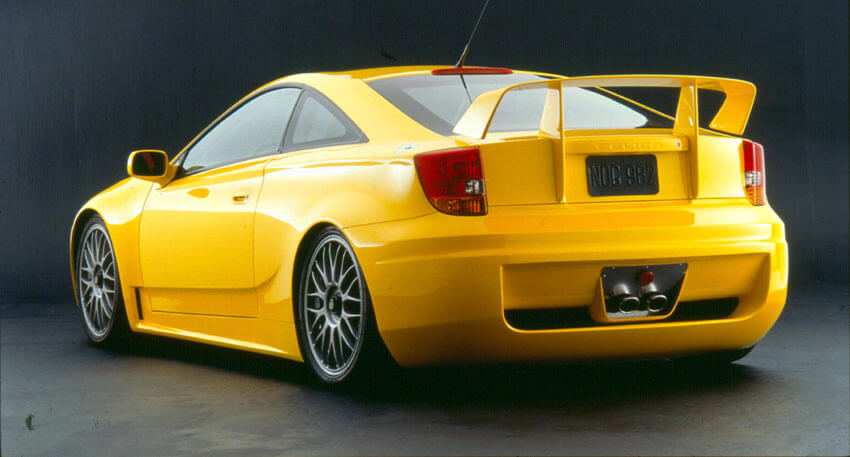
When the perfect Celica was ready, the reality exceeded all expectations. Car and Driver magazine measured a 4,9-second 0-96-mph sprint and a 13,3-second quarter-mile, but the huge turbocharger and the five-speed GT-Four transmission made a hellish pair. After each shift, the rpms plummeted, the engine found itself in a turbocharger hole, and for a moment the car almost died under the driver's hands. Then the turbocharger pressure suddenly built up, and the torque from the engine hit the driver in the back with brutal force. At the next gear, everything started all over again: silence, a pause, then a hyperspace jump. The Ultimate Celica could not be driven in a nice rhythm, but rather had to be constantly chanted: this beast first laughed at its driver after each shift, then tried to kill him.
Photos: Toyota, Toyota UK Magazine, Wikimedia
Published by Smarter Media Communications Agency ( http://news.smartermedia. )
Source: https://news.smartermedia.hu/nemzetkozi-hirek/180-loerobol-500-az-ultimate-celica-tortenete

Subscribe to Autosajto.hu to your newsletter


