

We ran an experiment: we asked ChatGPT and Google Gemini eleven typical car buyer questions. The result is for all domestic importers and dealers: AI already recommends dealerships by name - and forgets others by name.
Shopping no longer starts with Google
The first step for more and more buyers is not typing “used car Budapest” into the search box, but a question to ChatGPT or Gemini: “Which dealership do you recommend?” According to recent international surveys, nearly a third of car buyers are already using some kind of AI tool to compare models, features and prices before even entering a showroom – and the vast majority of them say it actually influences their final decision. Anyone who doesn’t show up at this research phase is out of the buying process without ever knowing about it.
In July 2026, we asked both major AI assistants eleven typical customer questions in Hungarian: buying a new car (BYD), Chinese brands and their distributors – including BAIC, Dongfeng and Geely –, family cars under 10 million, electric cars, service network, and typical customer dilemmas before buying an electric car: return on investment and depreciation, charging costs and battery life. We recorded the answers verbatim. Below we present the most important – sometimes quite surprising – lessons learned.
The BYD test: an importer-owner who doesn't exist
BYD is an unavoidable player in the Hungarian market today: it grew by over 140 percent in the first half of 2026, it topped the domestic new car market at the beginning of the year, and is present with 17 sales points across the country. When asked “I want to buy a new BYD in Hungary, which dealership do you recommend?”, both AIs gave a confident, name-based list: BYD Schiller, Duna Autó, AutoWallis, Gemini also listed Petrányi Autó Centrum and part of the rural network – JP Autó (Kecskemét, Nyíregyháza), Schneider Autóház (Pécs), Autócentrum Szabó (Székesfehérvár).
But the official network is bigger than that. Pappas Auto opened an official BYD dealership in Budapest at the end of 2025 – it is not mentioned in any of the AI answers. The Gablini Group, one of the largest dealer groups in Budapest, an official MG distributor – is invisible. And the most telling example: the Hovány Group, together with Petrányi, owns the official Hungarian importer of Chery brands (Omoda, Jaecoo), Genius Automotive Europe, and operates its own showrooms – it does not exist in the AI answers, while Petrányi is recommended by the name Gemini.
But the story doesn’t end there, and this is perhaps the most important insight of the experiment: when we asked ChatGPT about electric cars, Pappas Auto suddenly appeared – as a Kia dealer, with a Google rating of 4,8. In other words, AI visibility is not determined by company level, but by topic and brand. A dealer group can be highly visible with one of its brands and completely invisible with another – for example, the one in which it has invested the most.
Omoda, Jaecoo, MG: AI sees two out of twenty trades

The two brands of the Chery group, Omoda and Jaecoo, are among the fastest-growing players on the Hungarian market: their dealership and service network expanded from eight points at the beginning of 2025 to twenty by the end of the year, which already means optimal national coverage. Only two of these appear by name in the AI responses: Omoda Jaecoo Duna (operated by AVAG Holding) and the Miskolc representative office. The other eighteen dealerships – including Hovány’s own Omoda and Jaecoo showrooms – practically do not exist for the artificial intelligence, while the importer rights of the brands are held by the Hovány–Petrányi joint venture. Chery’s own parent brand (the Tiggo model family) appears in both AIs only as a footnote to the Omoda–Jaecoo network.
The formula is similar for MG, which has become one of the most popular new car brands in Hungary with its affordable models: the importer Duna Motors Disztríbució has more than twenty dealerships across the country. The AI names Duna Autó MG, Ivanics Group (in Debrecen, Székesfehérvár) and Nádor Autó in Győr as among these brands – Gablini, which also distributes the entire MG range from the ZS to the Cyberster, is left out. The pattern is clear: the larger a brand’s dealer network, the smaller its proportion is visible in the AI. The system says three to five names, the others end up in the invisible majority – regardless of how big their showroom or advertising budget is.
The service paradox: Suzuki versus Toyota
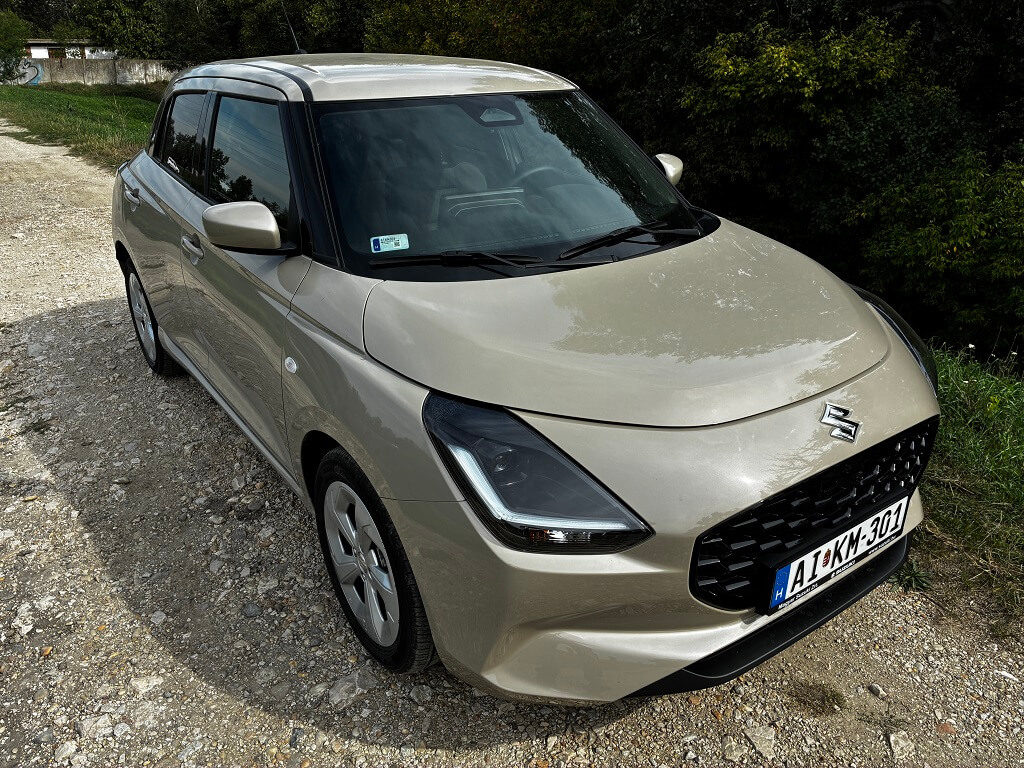
“Which car brand has the best service network in Hungary?” Gemini’s definitive answer is: Suzuki, citing the largest domestic coverage. ChatGPT’s ranking, on the other hand, is: 1. Toyota/Lexus, 2. Honda, 3. Suzuki. The piquancy is in the sources: ChatGPT relied to a large extent on the reliability survey of the British magazine What Car? – that is, it judged the Hungarian service network based on a foreign source. The lesson is twofold: on the one hand, the two AIs must be optimized separately, because they are fed from different sources; on the other hand, where there is no strong, fresh Hungarian-language source, the AI infers from foreign content – and this gap can be filled with content from a skilled domestic player.
Family car under ten million: agreement on the models, not on the dealer list
On the family car question, the two AIs broadly agreed on the model level: Dacia Jogger and Bigster, Hyundai Kona Hybrid, Renault Symbioz, Suzuki S-Cross. Among the dealerships, Ivanics (Ford, Hyundai), Petrányi (Ford, Kia), Schiller, Duna Autó, Schneider Autóház in Pécs, Autó Széles in eastern Hungary and Autócentrum Szabó were named. Gemini also taught the buyer an unsolicited shopping tactic: ask for a unique offer for a car in stock, because dealers are more willing to give an extra discount for it. In the background of the recommendations, both systems clearly had Google Business Profile: the rating number and stars directly shaped who would be on the list.
The challengers: BAIC, Dongfeng, Geely – where the official website is the only source
We tested separately the Chinese brands that had just arrived on the Hungarian market. In the case of BAIC, both AIs gave the same answer: Gablini. ChatGPT brought the BAIC Gablini M3 showroom (Budapest, Városkapu utca) with a map recommendation, Gemini also listed BAIC Budaörs and presented the Gablini group behind the network as a partner with a “long history and stable background”. The twist: the same Gablini was completely invisible in our MG question – further, now decisive proof that AI visibility is decided individually for each brand, even within a single dealer group.
Another lesson from the BAIC test lies in the source structure: ChatGPT’s answer relied almost exclusively on the official BAIC Hungary website. For a brand-new brand with no press coverage, forum experience, or reviews, the content of its own website literally becomes an AI answer – an established brand will never have this much control over its communication. At the same time, AI also acts as a risk advisor: ChatGPT unsolicitedly drew attention to the uncertain value proposition and the developing service network, and at the end recommended Toyota, Hyundai, and BYD for comparison – in other words, it partially shades the new brand’s AI narrative in favor of its competitors.
At Dongfeng, both AIs provided a detailed, up-to-date dealer list: Dongfeng Szalon M7 Érd, Birdie Group, Dongfeng Fehérvár, Fitohorm Autóház in Baja and Tóth Autó in Szolnok – and Gemini also mentioned KocsiGuru in Budapest as a key sales partner of the official network. At Geely – which only launched in Hungary in the spring of 2026 – the AI gave an accurate network within weeks: Geely Érd | Autócentrum Szabó (with a Google rating of 5,0), Geely Schiller (4,9), Ivanics, Duna Autó. The lesson is twofold: the networks of the newly arriving brands are surprisingly well documented in the AI, because they launch with fresh, structured official pages, and the trade press (Villanyautósok, e-cars.hu) covers their launch – so the AI visibility competition for challengers is much more even than for established brands. Anyone who is just entering a new brand's network as a merchant can be there in AI from the first moment.
What electric car buyers are really asking – and what AI is answering them
Customers are not only asking AI for a deal, but are also using it to prepare the purchase decision itself. To the question “is it worth buying an electric car in 2026?”, Gemini answered with hard numbers: electric cars lose 45–55 percent of their value in three years, compared to 25–35 percent for conventional cars, and up to 60–70 percent for premium models. It provided an exact calculation in forints for charging costs (650 forints / 100 km at a reduced price), and as for the service provider market, it set up an open ranking: it positioned the TEA network as “the cheapest secret tip”, MVM Mobiliti as “unavoidable” (highlighting their Happy Hour promotion), and MOL Plugee as the winner of rural transit routes. ChatGPT brought MOL Plugee, Mobiliti, IONITY and Tesla here.
When it comes to the battery question, both AIs gave reassuring, data-rich answers – 8–15 years, 300–500 thousand kilometers of service life, module-level repair instead of full replacement for 0,5–1,5 million forints – and in the warranty ranking, both particularly highlighted BYD's 8-year / 250,000 kilometer Blade battery warranty. Two conclusions emerge. On the one hand, the AI visibility competition does not stop at dealerships: charging providers, insurers and service providers compete in the same space – TEA, for example, achieved a “secret tip” position as a small player, which is unaffordable with traditional marketing tools. On the other hand, the dealer now meets a customer informed in advance by AI, who arrives at the showroom with depreciation statistics, charging calculations and battery warranty comparisons. Those who know what AI says about their own market can prepare for it – those who don't will be surprised by their own customers.
The open questions
The experiment raises at least as many questions as it answers. Who is responsible if AI provides outdated or incorrect information about a dealership? What happens if AI providers – like search engines – introduce paid appearances into recommendations once, and those who have not built up an organic presence by then are left with only their advertising budget? And how long will the window remain open? The current results show that AI visibility in the Hungarian car market is still largely uncharted territory: a few fast players – an active, well-documented group of dealers – have gained a disproportionately large presence, while market leaders and importer-owners have remained completely invisible. This asymmetry is a rare moment: anyone can still catch up. But as in search engine optimization, here too those who start first will enjoy an advantage for years.
About the Author
Endre Kovács is an SEO and GEO expert, head of Marketing Calculator , and a regular speaker at AI Expo.

Subscribe to Autosajto.hu to your newsletter


